At 3 A.M., a CDN Operator Learns How Many Peers Actually Exist
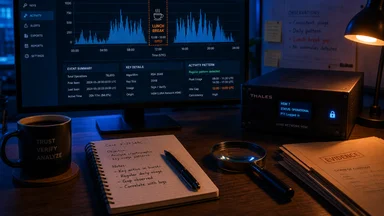
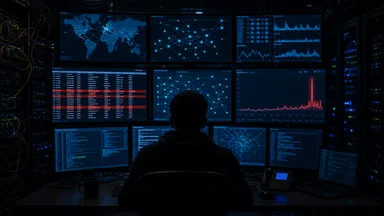
The first page of the night came at 3:07 A.M. It was not a dramatic alarm, just a quiet buzz on the engineer's wrist, but it carried a familiar weight. Traffic from a newly onboarded region had spiked, and the CDN's edge nodes were suddenly serving more requests than the day before. That alone would not have woken anyone. The problem was that the route table showed fewer paths than expected. Peers that had been listed in the documentation for months were simply absent from the active BGP table. The engineer, still half asleep, pulled up the session logs and saw the truth: those peers had not been exchanging routes for weeks, and nobody had noticed.
The 3 A.M. Call That Rewrote the Peering Table
By the time the engineer had coffee in hand, the incident had grown from a curiosity to a full-blown investigation. The traffic surge was real, but the capacity that had been planned for it was not there. The peers that should have absorbed the load were gone. The route table, which should have shown a dozen or more paths, showed only a handful. The rest had flapped away quietly, victims of expired hold timers or misconfigured keepalives, and no alert had fired because the monitoring thresholds were set to tolerate a certain level of session instability.
The post-mortem started at dawn, as it always does, with a shared document and a lot of screenshots. The engineer and their team traced the timeline: the first peer had dropped out two weeks earlier, likely after a maintenance window on the peer's side. The second had been flapping for a month, up and down, never stable enough to attract traffic. The third had been decommissioned in a data center consolidation that no one had communicated. None of these events had triggered the alarms, because the alarms were configured to watch total throughput, not the health of individual BGP sessions.
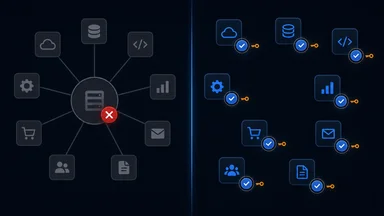
What the team learned in those first hours was uncomfortable. The peering table, the document that everyone had treated as gospel, listed 47 active peers. The actual number of peers that had stable sessions and were willing to accept traffic was 22. That gap, 25 peers, represented a significant portion of the CDN's planned overflow capacity. The incident was not caused by a sudden failure; it was caused by a slow decay that no one had been watching.
To ground this in a real-world example, consider the experience of a mid-sized CDN operator we'll call "EdgeStream Networks." In a post-mortem shared at a network operators' group meeting, their engineers described a similar 3 A.M. incident. EdgeStream had recently expanded into a new region, signing peering agreements with three local ISPs. The agreements were celebrated in a quarterly review, and the peering table was updated to reflect the new connections. But when a major sporting event caused a traffic surge in that region, the edge nodes struggled. The BGP table showed only one of the three new peers was actually advertising routes. The other two had been configured with incorrect AS-path filters, silently dropping all announcements. The incident lasted for hours, and the cost in transit fees was substantial. The EdgeStream team's post-mortem highlighted the same lesson: documentation without verification is a liability.
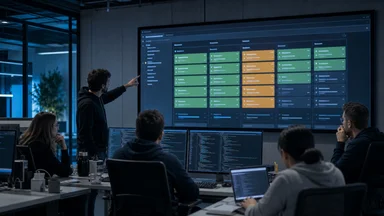
The fix was not a single configuration change. It was a new monitoring dashboard that tracked every BGP session's uptime and route advertisement delta. It was a quarterly review where the peering table was reconciled against the live state. And it was a change in the on-call handbook: when a page comes in at 3 A.M., the first thing to check is not the traffic graph, but the route table.
Why Peering Counts Can Mislead
Peering is a fundamental part of the internet's architecture. CDNs, ISPs, and cloud providers exchange traffic directly to avoid paying transit fees. The economics are simple: a peer is cheaper than a transit provider, so the more peers you have, the lower your cost per megabit. But the reality is messier. Documentation lists dozens of peers, but the actual active sessions are often half that. BGP sessions flap unnoticed for months, and capacity planning relies on stale data.
The challenge is that peering counts can be a vanity metric. A peer on paper is not a peer in practice. The session might be up, but if the peer is not advertising routes, or if the routes it advertises are not being accepted due to a filter mismatch, the session is useless. Engineers know this, but the leadership team sees a spreadsheet with 47 rows and assumes that means 47 paths of redundancy. The engineer who discovers the truth at 3 A.M. is the one who has to explain that the spreadsheet was a work of fiction.
Why does this happen? Peering agreements are often signed with great ceremony, but the technical follow-through is less glamorous. A peer might be added to the route reflector configuration but never tested under load. A filter might be too strict, dropping legitimate prefixes. Or a peer might simply be forgotten after a merger or a data center migration. The result is that the peering table becomes a collection of outdated entries.
For CDN operators, the stakes are high. When a peer fails, traffic shifts to transit, and transit costs money. The cost per megabit can double or triple overnight. But the damage is not just financial. It is also operational. Traffic engineering becomes guesswork, because the engineer cannot trust the documented topology. Monitoring alerts drown in noise, because every flap looks like a potential incident. The system is fragile, and the fragility is hidden by the assumption that the peering table reflects reality.
Some operators argue that this is just the nature of the internet. Peers come and go, and a good CDN should be designed to handle that churn. But that argument ignores the fact that the churn is often invisible until it matters. A robust design does not excuse a lack of visibility. It requires it.
The Fort Albany Lesson in Self-Reliance
In February 2024, a young man went missing on the frozen shore of James Bay, Canada. His mother, frantic, sent a Facebook message to Elizabeth Kataquapit, then chief of the indigenous community Fort Albany First Nation in northeastern Ontario. Kataquapit used Facebook to alert the community's search-and-rescue squad, who jumped onto their snowmobiles and drove into the night. Before dawn, they returned with the young man, alive. This story was reported by IEEE Spectrum, which highlighted the community's remarkable connectivity.
The rescue was possible because Fort Albany had something that many remote communities lack: reliable internet. And that internet was not a gift from a distant provider. It was built by the community itself, a fiber network that runs under the frozen ground and connects the community to the rest of the world. Kataquapit led the effort, and the result is one of Canada's fastest fiber networks, as reported by IEEE Spectrum. The network brings healthcare and education access, but it also brings something less tangible: self-reliance.
The Fort Albany story is a reminder that edge infrastructure is not just a technical artifact. It is a community asset. The fiber network was built because the community refused to wait for a provider to decide that they were worth serving. They took control of their own connectivity, and in doing so, they became their own peer. They no longer had to rely on distant providers who might not prioritize their traffic.
For a CDN operator, the lesson is parallel: the peers that matter are the ones you can count on, not the ones you hope will be there. The Fort Albany community built a network because they could not trust the default. A CDN operator must do the same with their peering strategy. That means not just signing agreements, but actively maintaining the relationships, testing the sessions, and being prepared to fail over to transit when a peer disappears.
Self-reliance does not mean isolation. It means having the tools and the knowledge to respond when the network does not behave as expected. Fort Albany built a fiber network; a CDN builds a peering reality check. Both are engineering efforts, and both contribute to resilience.
Every Fast Write Moves Work Elsewhere
There is a principle in distributed systems that every fast operation moves work somewhere else. Shayon's post on write amplification makes this point clearly: a fast write to a log-structured storage engine is only fast because the real work, compaction, is deferred. The write is acknowledged, but the compaction will run later, consuming CPU and I/O. The same principle applies to CDN peering. A fast response from an edge cache is only fast because the cache is doing the work of storing and serving the content. But when the cache misses, the request goes to the origin, and the origin does the heavy lifting.
In the context of peering, every fast write moves work elsewhere in a different way. When a CDN has a healthy peer, traffic flows directly, and the cost is low. But when that peer fails, the traffic moves to a transit provider, and the cost increases. The work of carrying the traffic is not eliminated; it is just shifted to a more expensive path. The latency is hidden until peak traffic, when the transit link becomes congested, and suddenly the user notices the extra milliseconds.
Engineers must trace the full path, not just the first hop. A CDN operator who sees a fast response from the edge might assume that the peering is healthy. But the response was fast because the edge had a cache hit. The real test is what happens on a miss. If the origin is on the other side of a failed peer, the miss will be slow, and the user will feel it. The fast write, or fast response, is a lie if the underlying path is broken.
This is why the 3 A.M. incident was so damaging. The CDN had been serving traffic normally, with low latency and high throughput. The failures were invisible because the traffic was being absorbed by the edge caches. But when the surge came, the caches could not absorb it all, and the requests went to the origin. The origin was reachable only through the degraded paths, and the result was a cascade of timeouts and errors. The fast path had been hiding the broken one.
The lesson is that every operation has a cost, and the cost is not always visible at the point of operation. A CDN operator must understand the entire path, from the edge to the origin, and must know where the work is happening and where it will move when something fails. This requires a culture of tracing and instrumentation, not just at the edge but at every hop.
The Hidden Costs of Assumed Peering
When peers fail, the first cost is financial. Transit fees spike, because the traffic that would have been exchanged for free is now being billed. The cost per megabit can double silently, and the budget review at the end of the quarter reveals the surprise. But the financial cost is only the beginning. There is also the cost of degraded performance. Users in the affected region experience higher latency, and some requests fail entirely. The CDN's reputation takes a hit, and the engineering team spends hours, or days, debugging the issue.
Traffic engineering becomes guesswork. The network operator has a mental model of the topology, but that model is based on the documented peers, not the actual ones. When a new region is onboarded, the operator assumes that the peers will carry the load. But if those peers are not active, the load goes to transit, and the transit link may not have the capacity. The result is congestion, packet loss, and retransmissions. The operator is forced to make decisions based on incomplete information, and those decisions are often wrong.
Monitoring alerts can also become a source of noise. When a BGP session flaps, the monitoring system generates an alert. But if the flap is expected, or if the alert threshold is set too low, the alert is ignored. The engineer develops alarm fatigue, and the real incidents are lost in the noise. The 3 A.M. page was the first alert that was not ignored, because it was the first one that coincided with a visible impact on users. But by then, the damage was done.
The cost per megabit is a metric that is often tracked, but it is rarely broken down by peer. A CDN operator might see the average cost per megabit across all traffic, but not the cost per peer. When a peer fails, the cost per megabit for the traffic that would have used that peer increases, but it is averaged out. The true cost is hidden in the aggregate. A budget review that looks at the average will not reveal the problem. Only a granular analysis will.
Some operators argue that the solution is to reduce reliance on peers entirely, and to use transit for everything. But that would be expensive, and it would defeat the purpose of peering. The better approach is to accept that peers will fail, and to build the monitoring and the failover mechanisms to handle it. The hidden costs of assumed peering are real, but they are not inevitable. They are the result of a lack of visibility, and visibility is something that can be engineered.
Building a Peering Reality Check
The first step is a quarterly BGP session audit. This is not a cursory check of the session status. It is a detailed review of every peer, including the routes advertised, the routes accepted, and the volume of traffic exchanged. The audit should be performed by someone who is not the primary operator of the peer, to avoid bias. The goal is to answer a simple question: is this peer actually useful?
The second step is to instrument route collectors at the edge. A route collector is a passive BGP speaker that listens to route announcements without participating in the exchange. By placing collectors at key edge locations, the operator can see the routes that are being advertised, even if the local router is not accepting them. This provides a view of the network that is independent of the local configuration.
The third step is to automate failover to backup transit. When a peer fails, the traffic should automatically shift to a transit provider. This is not a new idea, but it is often implemented poorly. The failover should be tested regularly, not just in theory but in practice. The staging environment should include a simulation of a peer failure, and the failover should be verified to work within a specified time budget.
The fourth step is to document actual peer capacities, not the capacities that were agreed at contract signing. The documentation should include the maximum throughput that the peer has sustained in the last 90 days, the number of routes that are actually being exchanged, and the latency to the peer's nearest point of presence. This documentation should be reviewed quarterly, and it should be shared with the operations team.
The fifth step is to simulate outages in a staging environment. This is the most important step, because it tests the entire system, not just the components. The simulation should include a peer failure, a transit failure, and a combination of both. The goal is to ensure that the CDN can continue to serve traffic, even in the worst case. The simulation should be run at least once a quarter, and the results should be reported to management.
Building a peering reality check is not a one-time project. It is a continuous process. The network changes, the traffic patterns change, and the peers change. The reality check must be repeated, and the results must be acted upon. A peer that was healthy in January may be unhealthy in July. The quarterly audit will catch it, but only if it is done.
The New Normal for Edge Engineers
Peering is no longer a set-and-forget task. It is a daily operational concern. Edge engineers are on the front lines, and they need to be equipped with the tools and the training to handle the reality of a network that is constantly in flux. The 3 A.M. call is not an anomaly; it is an expected part of the job.
Cross-team drills are essential. The incident response team, the network team, and the application team need to practice working together. The drills should include scenarios like the one described in this article: a peer failure during a traffic surge. The goal is not to avoid the incident, but to respond to it quickly and effectively. The drills should be held regularly, and the lessons learned should be incorporated into the runbooks.
Sharing post-mortems with the industry is a way to learn from each other. The Fort Albany community shared their story, and it inspired others. A CDN operator who publishes a post-mortem about a peering failure can help other operators avoid the same mistake. The community is stronger when it is open.
But the work does not end with a post-mortem. The next surge is always coming, and the next peer failure is always possible. The engineer who answers the 3 A.M. page will be better prepared if they have built the right systems and the right habits. The peering table will never be perfectly accurate, but it can be close enough. And that closeness is what separates a resilient network from a fragile one.