Post-Breach Forensics Now Reconstruct a Signing Key’s Entire Lunch Break
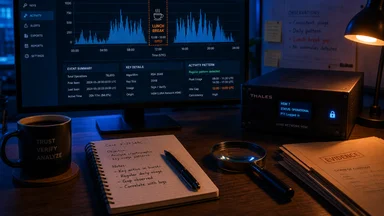
The signing key's lunch break is no longer a joke. In 2026, when a security incident involves a compromised signing key, forensic investigators don't just ask what was signed. They reconstruct the key's entire activity timeline, from the moment it was minted to the moment it was revoked. Every signature, every hash, every idle minute is scrutinized. The attacker's window of key misuse has become the new battleground, and key compromise is no longer a moment, but a narrative.
The Signing Key’s Lunch Break Isn’t a Joke Anymore
Consider a typical incident: a package published to a registry contains malicious code, and the signing key used to authenticate it is suspected of being compromised. In the past, the response was straightforward: revoke the key, rotate it, and move on. But now, auditors and regulators demand more. They want to know exactly when the key was used, what it signed, and whether there were any gaps in its activity that might indicate unauthorized access.
That gap is what I call the key's lunch break. It's the period when the key was not actively signing anything, a window that could be innocent or could be the moment an attacker exfiltrated the private key and used it elsewhere. In post-breach forensics, this idle time is now a prime suspect. Investigators examine logs, timestamps, and usage patterns to determine whether the key was dormant because it wasn't needed, or because someone else was using it without authorization.
The shift is driven by the realization that key compromise isn't a single event. It's a process that unfolds over time, and the forensic reconstruction of that process is what tells the real story. In 2026, security teams are expected to provide a detailed account of a key's life, including its lunch breaks, as part of any incident report.
This new focus has profound implications for how we design signing systems, how we monitor them, and how we respond to breaches. It's no longer enough to have a key that signs things; you need a key that leaves a trail of evidence, one that can stand up to scrutiny when things go wrong.
From ‘Revoke and Rotate’ to ‘Explain Every Byte’
The old playbook for a compromised signing key was simple: detect the leak, revoke the key, rotate to a new one, and consider the matter closed. But that approach is no longer sufficient. Auditors and regulators now demand a full activity log of the key, a detailed record of every operation it performed, from creation to revocation.
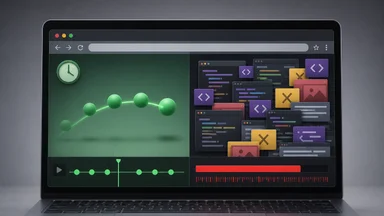
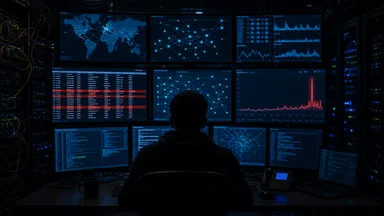
Digital forensics have evolved to trace a key's behavior across systems. Investigators can now reconstruct the key's activity by correlating logs from multiple sources: the signing service, the package registry, the code repository, and even the network infrastructure. This allows them to build a complete picture of what the key did, when it did it, and with whom it interacted.
At the wire level, this has led to changes in how signing protocols operate. Signing envelopes now embed key-usage counters, each signature carries a monotonic sequence number, and API endpoints expose key activity streams for analysis. These are not just internal details; they are part of the public interface between systems, making forensic evidence collection a built-in feature rather than an afterthought.
Supply-chain standards are also shifting toward forensic-ready signing. New guidelines from industry bodies are starting to require that signing services maintain tamper-evident audit logs and provide APIs for querying key activity. The goal is to make it possible, after a breach, to answer the question: what did this key do, and when?
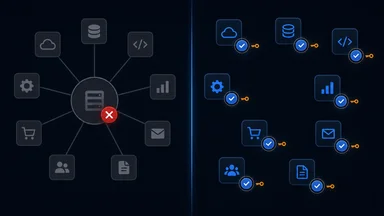
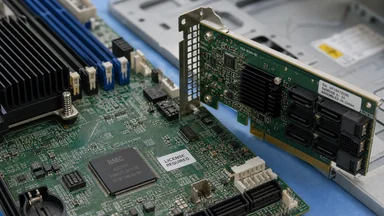
But there's a tension here. The same logs that enable forensic reconstruction also create new attack surfaces. An attacker who compromises a signing service could tamper with the logs to hide their activity, undermining the entire forensic process. This has led to a push for hardware-backed logging, where the audit trail is anchored in a tamper-resistant device, such as a hardware security module (HSM) or a secure enclave. These devices can generate and store logs that are cryptographically signed and cannot be altered without detection, even by someone with administrative access to the signing service. However, this approach introduces its own challenges, including higher costs and more complex key management workflows.
What the Wire Protocol Actually Changed
To understand the practical impact, let's look at the wire protocol. In a modern signing system, each signature is no longer just a cryptographic proof; it's a record. Signing envelopes now embed a key-usage counter, a monotonic sequence number that increments with every signature. This counter allows investigators to detect if a key has been cloned, because two different systems would generate conflicting sequence numbers.
Additionally, each signature carries a timestamp that is signed along with the data, creating a tamper-evident record of when the signature was created. This is a significant change from earlier protocols where timestamps were often added as an afterthought and could be modified without detection.
API endpoints for key management now expose activity streams, allowing security teams to query a key's entire history. These streams include not only signatures but also key rotation events, access attempts, and even failed verification attempts. This data is crucial for forensic analysis, as it allows investigators to identify anomalies, such as a key being used from an unexpected location or at an unusual time.
Replay detection and anomaly flags have become mandatory in many systems. If a signature is presented twice, or if a key is used in a pattern that deviates from its historical behavior, the system flags it. This is not just for security; it's also for forensic readiness. The flags themselves become part of the key's activity log, providing a narrative of suspicious activity that can be reviewed after a breach.
Firmware updates and package managers have also started logging key interactions. When a signed firmware update is installed, the system records the key that signed it, the timestamp, and the hash of the update. This allows investigators to trace the provenance of any piece of code back to the key that signed it, and to see if that key was compromised at the time.
However, these wire-level changes come with trade-offs. Embedding additional metadata in every signature increases the size of each signed artifact, which can slow down transmission and increase storage costs. For example, a signing envelope that previously added a few dozen bytes to a package might now add several hundred bytes, which can be significant for high-frequency signing environments. Moreover, the requirement for monotonic sequence numbers forces signing services to maintain a consistent global state, which can be a bottleneck in distributed systems. Some organizations have adopted hybrid approaches: they use a local counter for each signing node and include a node identifier in the envelope, allowing the sequence number to be unique without requiring a centralized coordinator. This trade-off between forensic richness and operational simplicity is a key decision for architects designing signing systems.
The Human Cost: On-Call for a Key’s Every Move
These changes have a significant human cost. Security engineers now find themselves babysitting keys like toddlers. They are responsible for monitoring key activity, responding to alerts, and ensuring that keys are used only as intended. The constant vigilance takes a toll, and the rate of false positives is high.
Consider a key that is used at 3 AM. In the old days, this would pass unnoticed. Now, it triggers an alert, and an on-call engineer is woken up to investigate. Often, the key was used legitimately by a build process running overnight, but the engineer still has to verify that. The stress of these constant interruptions contributes to burnout, especially as the number of keys multiplies across cloud and edge environments.
Post-breach reviews have become archaeological digs. Investigators sift through layers of logs, trying to reconstruct the key's timeline. They look for the lunch break, the idle period that might indicate unauthorized use. This is painstaking work, and it requires a deep understanding of the systems involved. The days of a quick revoke-and-rotate are gone; now, a breach can occupy a team for weeks.
The career shift is real. Security engineers are no longer just writing code; they are writing key biographies. They must be able to tell the story of a key's life, from its creation to its demise, and to explain every action it took. This requires a new set of skills, including forensic analysis and incident response, and it changes the nature of the job.
To mitigate the human toll, some organizations are investing in automation and machine learning to filter out benign anomalies. For example, a key that is used by a nightly build process might have a predictable pattern, and an alerting system can be trained to recognize that pattern and suppress false alarms. Others are adopting a tiered response model: low-severity anomalies are logged and reviewed during business hours, while only high-confidence indicators of compromise trigger immediate alerts. This reduces the number of after-hours pages while still maintaining a forensic trail. However, these measures require careful tuning and can themselves introduce new risks, such as missing a genuine attack because it was deemed 'normal' by the model.
Case Study: The Aptera Solar-Charging Key Fiasco
A recent incident involving Aptera, the electric vehicle startup, illustrates the challenges. In early 2026, Aptera was preparing to release a batch of solar-charging EVs, and a signing key used to authenticate firmware updates was suspected of being compromised. The initial alarm was raised when a key was used to sign a firmware update that was later found to be malicious.
Forensic reconstruction revealed that the key had been idle for about 40 minutes before the malicious signature was created. That idle period, the key's lunch break, became the focus of the investigation. Had an attacker exfiltrated the key during that time? Or was the key simply not used because no legitimate updates were being signed?
The investigation eventually determined that the cause was a misconfigured CI runner, not an attacker. The CI runner had been set up with the wrong environment variables, causing it to use the signing key in an unintended way. The 40-minute gap was just a normal lull in the build process. But the scare highlighted how human error can look identical to intrusion in key logs.
This case is a cautionary tale. It shows that the forensic reconstruction of a key's timeline is not just about catching attackers; it's also about understanding the complex interplay of automated systems. The lunch break can be innocent, but it can also be the moment of compromise. Discerning the difference requires careful analysis and a healthy dose of skepticism.
Interestingly, the Aptera incident also revealed a flaw in their logging system: the CI runner was not configured to include the node identifier in the signing envelope, so the sequence number appeared to be non-monotonic. This caused an anomaly flag, which triggered the initial investigation. If the system had been properly configured, the key's activity would have looked normal, and the malicious signature might have gone unnoticed for longer. This highlights a critical lesson: forensic readiness is not just about having logs; it's about ensuring that the logs are complete and accurate. A missing field can create a false alarm, but it can also blind you to a real attack.
What This Means for Your CI/CD Pipeline in 2026
So, what does this mean for your CI/CD pipeline? The first step is to treat every signing key as a potential forensic exhibit. That means implementing key-activity logging from day one, not after a breach. Every signature, every key rotation, every access attempt should be recorded in a tamper-evident log.
Second, use hardware security modules (HSMs) with tamper-evident logs. HSMs provide a secure environment for key storage and signing operations, and they can generate logs that are cryptographically protected against modification. This makes it much harder for an attacker to cover their tracks, and it simplifies forensic analysis.
Third, automate anomaly detection for key usage patterns. Machine learning models can learn the normal behavior of a key and flag deviations, such as use at unusual times or from unexpected locations. This can help you detect a compromise early, before it causes significant damage.
Finally, practice key forensics drills like fire drills. Regularly simulate a key compromise and walk through the steps of reconstructing the key's timeline. This will help your team become familiar with the tools and processes, and it will reveal gaps in your logging and monitoring that you can address before a real incident occurs.
The goal is to be prepared for the inevitable. Key compromises are not a matter of if, but when. By making your signing infrastructure forensic-ready, you can reduce the impact of a breach and speed up recovery.
But there's a counter-argument: all this forensic readiness adds complexity and overhead to your pipeline. Some teams argue that the cost of implementing comprehensive logging and monitoring outweighs the benefits, especially for small organizations with limited resources. They point out that the probability of a sophisticated key compromise is low, and that simpler measures, such as key rotation and access control, are sufficient. However, the trend in regulations and industry standards suggests that forensic readiness is becoming a baseline requirement. For example, new guidelines from the Secure Software Supply Chain initiative recommend that all signing keys be accompanied by an audit trail, and some customers are starting to demand proof of forensic readiness from their vendors. In the long run, the cost of not having these capabilities could be much higher, both in terms of regulatory penalties and lost trust.
The Next Standards Shift: Forensic-Ready Signing
Looking ahead, the next standards shift is already on the horizon. Expect new RFCs for key usage metadata and audit logs, specifying the exact format and content of these records. These standards will make it easier to share forensic data between organizations and to perform cross-system investigations.
Cloud providers are also moving toward offering key forensics as a service. Instead of building your own logging and analysis pipeline, you will be able to subscribe to a service that automatically tracks key activity and provides a dashboard for forensic queries. This will lower the barrier to entry for smaller organizations.
Open-source tools for key timeline reconstruction are emerging. These tools can ingest logs from multiple sources and produce a visual timeline of a key's activity, making it easier for investigators to spot anomalies. Expect these tools to become more sophisticated as the field matures.
Regulatory pressure is growing for supply-chain transparency. Governments and industry bodies are increasingly requiring organizations to demonstrate that they can account for the use of their signing keys. This is part of a broader trend toward software supply-chain security, which has been a hot topic since the SolarWinds incident.
Your job is to prepare now, or later you'll be the one explaining a key's lunch break. The era of forensic-ready signing is here, and it's changing the way we think about key management. The signing key is no longer just a tool; it's a witness. And in 2026, every witness is expected to testify.
Balancing Forensics with Performance
One of the most pressing challenges is balancing forensic detail with system performance. Every extra byte of metadata in a signature, every additional log entry, and every anomaly check adds latency and storage overhead. For high-throughput signing services, this can become a bottleneck. Consider a package registry that signs hundreds of thousands of artifacts per day. If each signature envelope grows by 50 bytes, that's an extra 5 megabytes per day, which is negligible. But if the signing operation itself requires an extra round-trip to a centralized log service, the latency could increase significantly.
To address this, some systems use asynchronous logging: the signing operation completes without waiting for the log to be written, and the log is updated in the background. This reduces the impact on signing latency, but it introduces a window where a signature might exist without a corresponding log entry. If a breach occurs during that window, the forensic evidence could be incomplete. This trade-off is a classic example of the CAP theorem applied to security: you can have consistency, availability, or partition tolerance, but not all three. In practice, many organizations opt for a compromise: they use synchronous logging for the most critical keys (e.g., those used for software releases) and asynchronous logging for less critical keys (e.g., those used for test environments).
Another performance consideration is the storage and retention of audit logs. A key that is active for years can generate millions of log entries. Storing all of them can be costly, but deleting them could destroy forensic evidence. Some organizations implement tiered storage: recent logs are kept in fast, expensive storage for quick queries, while older logs are archived to cheaper, slower storage. They also define retention policies based on regulatory requirements and the criticality of the key. For example, a key used for code signing might have a retention period of seven years, while a key used for internal testing might only need logs for six months. These policies must be documented and enforced to ensure that evidence is available when needed.
Preparing Your Team for the Forensic Mindset
Finally, the shift to forensic-ready signing requires a cultural change within security teams. It's not enough to have the right tools; you need people who think forensically. This means training engineers to ask questions like: What would an investigator need to know about this key's activity? How can we make that information available and tamper-evident? What are the common patterns of key misuse that we should look for?
One way to foster this mindset is to conduct regular tabletop exercises where a key compromise is simulated, and the team must walk through the forensic reconstruction process. These exercises can reveal gaps in logging, unclear ownership of key-related data, and insufficient understanding of the wire protocol. They also help build muscle memory, so that when a real incident occurs, the team can respond quickly and methodically.
Another approach is to integrate forensic considerations into the design phase of new systems. When architects are designing a signing service, they should ask: How will we reconstruct the key's timeline if this service is compromised? What logs will we need, and how will they be protected? By making forensics a first-class requirement, you avoid the costly mistake of retrofitting logging after a breach.
In the end, the key's lunch break is a metaphor for the unknown. In a world where every signature is a witness, the gaps in the timeline are the cross-examination. The more prepared you are, the better you can handle the questions. The era of forensic-ready signing is not just about technology; it's about a mindset that values evidence and accountability.