Firmware Licensing Fees Outlast the Board’s Second Owner and Third Reseller
When a server board changes hands twice, the firmware license usually stays with the silicon, not the person holding the invoice. A second owner and a third reseller can find themselves billed for code they never agreed to license, simply because the original vendor tied the fee to the chip's identity. This is not a niche accounting quirk. It is the economics of embedded software, where the margin lives less in the physical die and more in the license that travels with it.
The License That Outlived the Hardware
Firmware fees persist beyond board ownership because the license is attached to the hardware, not to the purchaser. When a company buys a used server from a liquidator, the baseboard management controller (BMC) inside may still require an active license for advanced features like remote KVM or power capping. The original owner paid for that license as part of a support contract. The second owner inherits the hardware but not the contract, and the vendor still expects payment to keep the feature unlocked.
Take the Intel PRO/100+ Management Adapter as a concrete example. In the late 1990s, this network interface card shipped with firmware that implemented the protocol stack and supported Wake-on-LAN and network boot. Intel licensed the advanced management features per port, and the license was stored in the card's EEPROM. When a card was resold on eBay or through a surplus dealer, the new owner could use basic networking, but features like remote wake-up required a license key that Intel would only sell to the current registered owner. The original owner had moved on, the reseller had no relationship with Intel, and the card sat in a drawer with its full feature set locked. This pattern is documented in vintage computing forums, where users share workarounds and lament the locked features.
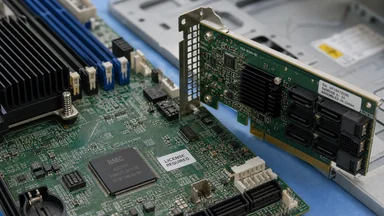
The same pattern repeats in modern gear. A RAID controller from a major vendor, say an LSI MegaRAID or Adaptec model, often has a cache license that enables write-back caching. That license is tied to the controller's serial number. When the controller is pulled from a decommissioned server and sold on the secondary market, the buyer may find that the cache feature is disabled unless they pay an unlock fee. The fee is not large, often in the tens of dollars, but it is a recurring cost that the second owner did not budget for.
What makes this durable is that the firmware itself is rarely updated after the first few years. The code on the chip is frozen, but the license check is still active. The vendor's backend server validates the license periodically, and if the new owner cannot produce a valid key, the feature reverts to a disabled state. The hardware is fully functional, but the software that makes it useful is not.
Where the Margin Actually Lives
Silicon cost drops over time, but firmware margin holds. A chip that cost $50 to manufacture in 2015 might cost $20 to produce today, but the license fee for the firmware that runs on it has not changed. Vendors price the firmware as a separate line item because it is where the recurring revenue lives. A one-time hardware sale is a blip; a per-unit license that renews annually is a stream.
Accelerator boards bundle hidden royalties. A GPU or a custom ASIC for machine learning often ships with a driver stack and a firmware image. The hardware cost is visible, but the firmware license may be embedded in the purchase price, or it may be a separate fee that the buyer discovers only when they try to update the driver. Some vendors charge per seat, meaning per GPU, for the software that enables the hardware to function at full capacity. The driver stack itself is not the product; the license to use it is.
BMC firmware fees outlive the server life. A server's BMC is a small computer that manages the motherboard. It runs its own firmware, and vendors often charge for advanced features like remote console access or sensor monitoring. These fees are typically bundled into the server's support contract, but when the contract ends, the BMC may revert to a reduced feature set. A second-hand server bought without a support contract may have a BMC that only offers basic power on/off, not the full remote management that the first owner enjoyed.
The margin in firmware is not just in the license fee itself. It is in the lock-in. Once a data center standardizes on a particular vendor's management interface, switching costs are high. The firmware license is the toll booth on that bridge. Even if the hardware is old, the license fee keeps the vendor's revenue alive long after the silicon has been amortized.
The Board's Second Owner Meets the Fee
Used enterprise gear resold with fees is a common story. A company decommissions a rack of servers, sells them to a reseller, and the reseller lists them on eBay or a specialty marketplace. The buyer, often a small business or a homelab enthusiast, expects a bargain. They get the hardware, but the firmware license is not transferred. The vendor's portal shows the license as active under the original owner's name, and the new owner cannot update the firmware or activate advanced features without paying a transfer fee.
The reseller is often unaware of the embedded license. They might test the server, see that it boots, and list it as fully functional. They do not check the BMC's license status or the RAID controller's cache setting. The buyer discovers the issue after installation, when they try to configure remote management or enable write-back caching. The fee is not huge, but it is unexpected, and it turns a deal into a hassle.
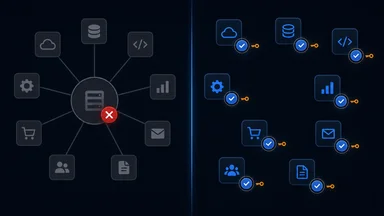
Firmware tied to MAC, not owner. Some licenses are bound to the network interface's MAC address. When the board is resold, the MAC address stays the same, so the license check still passes. But other licenses are tied to a customer account, and the vendor may require proof of purchase to transfer the license. If the original owner is a defunct company, the proof is gone.
Support contract ends, bill continues. The license fee is often separate from the support contract. Even if the support contract lapses, the license may still be billed annually. The second owner may receive an invoice from the vendor for a license they never signed up for, simply because the hardware is registered to their address after the resale. This is rare, but it happens, and it is a reminder that the license is a property right that travels with the device.
Why Firmware Escapes the First-Sale Doctrine
The first-sale doctrine allows the owner of a physical copy of a work to resell it without the copyright holder's permission. But software licenses are not sales; they are grants of limited rights. When you buy a board with firmware, you are not buying the firmware. You are buying a license to use it, and that license is often non-transferable. The EULA that you click through when you first boot the device says so, even if you never read it.
Licensing language prohibits transfer. Most firmware EULAs explicitly state that the license cannot be transferred without the vendor's written consent. The hardware can be sold, but the license stays with the original purchaser. This is why a second owner cannot simply use the firmware as they wish. They are, in legal terms, an unlicensed user, even if the code is physically present on the chip.
Courts rarely test embedded licenses. There have been a few cases involving software resale, such as the Oracle v. UsedSoft decision in Europe, but those involve standalone software, not firmware embedded in hardware. The legal status of firmware licenses is murky, and most buyers do not have the resources to challenge a vendor in court. The practical result is that the vendor's terms stand.
Reverse engineering carries legal risk. Some users might be tempted to bypass the license check by reverse engineering the firmware. But the Digital Millennium Copyright Act (DMCA) in the US and similar laws elsewhere make it illegal to circumvent technological protection measures. Even if the goal is interoperability, the legal risk is real. A hobbyist who hacks a BMC firmware to unlock features could face a cease-and-desist letter, or worse.
Consumer expectation vs. contract reality. Most people assume that when they buy a used device, they own it outright. The contract reality is that they own the hardware but only a limited license to the software. This disconnect is rarely explained at the point of sale. It is buried in the EULA that no one reads, and it only surfaces when a feature stops working.
The Accelerator Gold Rush Repeats the Pattern
Modern AI accelerators carry firmware fees that mirror the old RAID controller model. A GPU or a custom accelerator like Google's TPU or a startup's inference chip often requires a firmware license for full performance. The hardware is expensive, but the firmware license can be an additional per-chip cost. Some vendors bundle the license into the hardware price, but others charge separately, especially for enterprise customers who want advanced features like multi-tenant partitioning or secure boot.
Per-chip licensing on top of hardware cost is becoming more common. A data center that buys 1,000 accelerators may pay a firmware license fee for each one, and that fee is not a one-time cost. It may be an annual subscription that covers updates and support. If the accelerator is resold, the new owner may need to pay an unlock fee to activate the firmware, or the license may be voided entirely.
Firmware updates require an active license. Vendors often tie firmware updates to a valid license. If the license lapses, the accelerator may still work, but it cannot be updated to fix security vulnerabilities or improve performance. This is a significant issue for secondhand buyers, who may inherit a device with a known bug that cannot be patched without paying the vendor.
Secondhand accelerators face unlock charges. The secondary market for AI accelerators is growing as companies upgrade to newer models. A used A100 or H100 GPU might be sold for a fraction of its original price, but the buyer may need to pay a fee to transfer the license or to unlock the full feature set. Some estimates put these fees in the tens to hundreds of dollars per unit, depending on the vendor and the model. This is a small fraction of the hardware cost, but it is an unexpected expense that can sour a deal.
Reading the Fine Print Before You Buy Used
Ask for firmware license transfer proof. Before buying used enterprise gear, request documentation that the firmware license is transferable or that the seller has the right to transfer it. If the seller cannot provide this, assume that the license is not transferable and that you will need to pay the vendor for a new one.
Check vendor portal for activation history. Many vendors have online portals where you can check the license status of a device by its serial number. If the seller is willing to share the serial number, you can verify whether the license is active and whether it is tied to the seller's account. This can save you from buying a device that is permanently locked.
Budget for potential unlock fees. When calculating the total cost of a used device, add a line item for potential firmware unlock fees. This is especially important for accelerators and RAID controllers, where the fee can be significant. A $500 GPU might need a $200 license to unlock its full capabilities, making it less of a bargain than it seemed.
Prefer sellers with original invoices. A seller who has the original invoice can often transfer the license more easily, because they can prove they are the original purchaser. A seller who bought the device secondhand may not have the legal standing to transfer the license, even if they want to.
Test firmware update before payment. If possible, try to update the firmware before you pay. If the update fails because the license is invalid, you know what you are getting into. This is not always possible, but it is a useful test when the seller is local or when you can arrange a remote session.
The Fee That Never Dies
Firmware licensing outlives hardware. The silicon eventually fails, but the license fee continues as long as the device is in use. This is by design, because vendors want recurring revenue. The second owner and the third reseller are part of a chain that keeps the vendor's income flowing long after the original sale.
Resellers absorb legacy costs silently. A reseller who buys a pallet of used servers may not realize that some units have firmware licenses that are about to expire. They might sell the servers at a price that does not account for the license renewal, and the buyer ends up paying more than they expected. The reseller's margin is thin, and the license fee is an invisible cost that they pass on, often unknowingly.
Planning requires license due diligence. For anyone who buys used enterprise hardware, the due diligence should include a check of all firmware licenses. This is not just about the BMC or the RAID controller; it is about every chip that has a license check, from the network interface to the storage controller to the accelerator. The cost of this due diligence is small compared to the surprise of an unlock fee.
Transparency remains rare in the industry. Vendors rarely advertise that their firmware licenses are non-transferable. They do not want to discourage used hardware sales, because that would reduce the demand for new hardware. But the lack of transparency creates a hidden cost for buyers, and it is a cost that is unlikely to disappear. As long as firmware is licensed, the fee will outlive the hardware, and the second owner will be the one who pays.