GPU Depreciation Schedules Now Decide Which Models Ever Get Trained
Ask most engineers why a particular model never made it past the planning stage, and you'll hear about data quality, architecture choices, or a competitor shipping first. Ask the finance team, and you'll get a different answer: the depreciation schedule on the GPUs that would have trained it. The machines that power modern machine learning are capital assets, and like any capital asset, they carry a clock that starts ticking the moment they're unboxed. That clock, not the research roadmap, increasingly decides which models ever get trained.
The Hidden Ledger Behind Every AI Model
Training a frontier-scale model costs millions of dollars in compute alone. Those millions are not a single upfront payment; they are the accumulated cost of thousands of GPUs running for weeks or months. But the way companies account for those GPUs shapes when and how they get used. A GPU is not an expense at the moment of purchase. It's an asset that gets written off over its "useful life," typically three to five years. The annual depreciation charge appears on the income statement, and it pressures the team to extract maximum value from the hardware before the clock runs out.
The practical effect is that a model that needs 10,000 GPUs for six months is not just a compute problem. It's a bet that those GPUs will generate enough value, through the model itself or through resale, to justify their acquisition cost. If the depreciation schedule says the hardware is worthless in four years, the model needs to pay for itself in that window. A model that would take longer to develop, or that has a less certain payoff, gets deprioritized. The ledger doesn't care about research elegance.
This dynamic is not new. Mainframe buyers in the 1970s faced the same arithmetic, and so did the teams that built the first GPU clusters for scientific computing. What's different now is the scale and the pace. A single training run can consume more compute than a small country's research budget. The depreciation schedule is no longer a background accounting detail; it's a strategic lever that determines whether a project is greenlit at all.
Consider the common practice of "useful life" estimates. NVIDIA's flagship data center GPUs are typically depreciated over three years by cloud providers, while some enterprises stretch that to five. The choice matters enormously. A three-year schedule means the hardware must generate revenue fast; a five-year schedule lowers the annual charge but risks holding onto obsolete chips. The number on the spreadsheet, chosen by accountants, effectively sets the pace of innovation inside the company.
Why Useful Life Is Shorter Than You Think
NVIDIA's product cycle is often cited as a three-year rhythm, but the real pressure comes from the fact that each new architecture makes the previous one look slow. When a new GPU generation ships, the older chips don't stop working, but their relative value drops. A cluster that was state-of-the-art two years ago might be half the speed of the new hardware, and that gap compounds with each generation. The useful life of a GPU in performance terms is often shorter than its accounting life.
Cloud providers feel this most acutely. They buy GPUs in huge volumes and must price their rental instances to cover the depreciation cost. A hyperscaler might depreciate an H100 over four years, but if the next architecture ships in two, the older chips become harder to rent at premium rates. The provider has two choices: lower the price and eat the margin, or keep the price and watch utilization drop. The depreciation schedule forces the decision, and customers feel it in the pricing.
Enterprises that buy their own clusters face a slightly different math. They can depreciate over five years, which lowers the annual charge and makes the purchase look more attractive on paper. But the technical reality is that a five-year-old GPU may be three generations behind, and the cost of retraining or fine-tuning on older hardware rises. Some companies extend the useful life by moving the hardware to inference-only workloads, which are less demanding. That's a workaround, not a solution.
Residual value estimates are another source of guesswork. When a company buys a GPU, it assumes it can sell the hardware at the end of its useful life for some percentage of the original cost. Those estimates are rarely accurate. The resale market for data center GPUs is thin and volatile, and a sudden influx of used chips can tank prices. The depreciation schedule assumes a smooth decline in value, but the market doesn't move that way.
The GPU Resale Market Is the Real Decision-Maker
The secondary market for GPUs has grown into a significant force. Used H100s and A100s trade on auction sites and through brokers, and the prices swing with each new announcement from NVIDIA or AMD. A company that planned to sell its fleet after three years might find the market has collapsed because a new chip made the old ones nearly worthless. Or the opposite: a shortage might keep prices high, turning the GPU into an appreciating asset, at least temporarily.
That volatility changes the break-even calculation for training runs. If a company believes it can resell its GPUs for 40% of the original cost after three years, the effective cost of training is lower. If the resale price drops to 20%, the training run becomes more expensive, and some projects stop making sense. The depreciation schedule is the baseline, but the resale market is the wildcard that can make or break a project's financial viability.
Small labs and startups often buy cast-off hardware from larger fleets. A research group with a modest budget can pick up used A100s at a fraction of their original price, which lets them train models that would otherwise be unaffordable. This creates a two-tier system: the top labs train on fresh hardware, while the rest make do with older chips. The depreciation schedules of the big players effectively subsidize the small ones, but they also create a dependency on the timing of fleet upgrades.
The resale market is also a source of price discovery. When a cloud provider announces it is retiring a generation of GPUs, the secondary market reacts immediately. The prices that emerge tell you what the market thinks the hardware is really worth, and that number often bears little relation to the accounting book value. A company that ignores the resale market when setting its depreciation schedule is flying blind, but few have the data to do otherwise.
Cloud Pricing Hides the Depreciation Game
Cloud providers don't publish their depreciation schedules, but the pricing of their GPU instances reveals the underlying assumptions. A rental price has to cover the hardware cost, the electricity, the cooling, the facility, and a margin. The hardware cost is largely a function of the depreciation schedule. A provider that depreciates over three years will charge more per hour than one that stretches it to five, all else being equal.
Spot instances are a direct window into this math. These are unused capacity sold at a deep discount, often 60-90% off the on-demand price. The provider is essentially saying: the hardware is already paid for, so any revenue is better than none. Spot pricing is a release valve for the pressure of depreciation, but it also creates a market where the marginal cost of a training run can be near zero. Startups and researchers who can tolerate interruptions flock to spot, and the provider gets to keep the hardware busy.
Reserved instances are the opposite. They lock in a utilization assumption, usually for one to three years, and the customer pays a lower rate in exchange for a commitment. The provider can plan its depreciation more accurately because it knows the hardware will be used. The risk shifts to the customer, who is on the hook for the full term even if the project stalls. That's a depreciation schedule in disguise, just written on the customer's side of the ledger.
Hyperscalers have an advantage in this game because they can amortize hardware over longer periods and spread the risk across millions of customers. A single startup can't do that. The cloud pricing model lets the startup avoid the capital expenditure but not the depreciation cost; it's just hidden in the hourly rate. The customer bears the risk through pricing, not through an explicit depreciation line item, but the effect is the same.
Research Labs and Startups Play Different Games
Academic labs rarely buy new GPUs. They rely on donated hardware, institutional clusters, or cloud credits from vendor programs. That means their depreciation schedules are effectively zero, because the hardware is a sunk cost from someone else's budget. This lets academics train models that would never pass a corporate finance review. The trade-off is that they often work with older chips, which limits the scale of what they can attempt.
Startups sit in the middle. They can't afford to buy a cluster outright, so they rent capacity from cloud providers. Their depreciation schedule is the length of their cloud contract, and they are at the mercy of the provider's pricing. A startup that signs a one-year reserved instance deal is committing to a cost structure that assumes the model will be trained and monetized within that window. That's a tight timeline for a field where research can take years.
Big labs, like those at the major AI companies, build their own clusters for control and cost efficiency at scale. They can afford to buy thousands of GPUs and depreciate them over a longer period, which lowers the effective cost per training run. But they also face the risk of stranded assets if the hardware becomes obsolete before the depreciation period ends. The internal debate between buying and renting is, at its core, a debate about who bears the depreciation risk.
Grant cycles add another layer of friction. Academic funding typically runs on a one-to-five-year cycle, and a grant that pays for GPU time is a different animal than one that pays for hardware. A lab that wins a three-year grant can train models for that period, but the depreciation clock on the hardware doesn't care about the grant's end date. Some labs end up with idle GPUs and no budget to use them, while others are scrambling to find compute before the grant expires.
When Models Get Shelved for Accounting Reasons
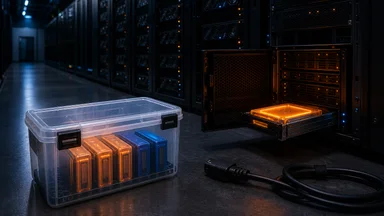
The most visible consequence of depreciation pressure is the abandoned training run. A project that looked promising on paper gets stopped halfway because the hardware it was using has been reallocated to a more profitable workload. The model checkpoints sit in a storage bucket, archived until someone decides whether the sunk cost is worth completing. The decision is rarely about the model's quality; it's about the opportunity cost of the GPUs.
Unused capacity still incurs write-downs. If a company buys a cluster and then fails to fill it with paying workloads, the depreciation charge still hits the income statement. This creates a perverse incentive to run any model, even a bad one, just to keep the hardware busy. Some companies may have trained models that they knew were not commercially viable, simply because the alternative was a write-down that would look worse to investors. For example, a startup that secured funding for a large GPU cluster might have run a series of fine-tuning experiments with no clear market demand, just to show utilization to its board. While this behavior isn't publicly documented, industry insiders have whispered about such incidents in private forums.
Hardware becomes stranded on balance sheets when a new architecture makes the old chips uncompetitive. A company that owns a fleet of A100s might find that it can't rent them out at a price that covers the depreciation, but it also can't sell them without taking a loss. The only option is to extend the useful life by moving the hardware to inference-only workloads, which are less demanding and can run on older chips for years. That extends the clock, but it also changes what the company can train.
Inference-only workloads are the lifeline for aging GPUs. A model that has already been trained can run on older hardware with acceptable latency, so the depreciation schedule can be stretched by shifting the hardware to serving. This is why you see companies keep five-year-old GPUs humming in production: the training cost is sunk, and the inference revenue covers the remaining depreciation. The model that was trained on that hardware becomes a long-lived asset, outliving the chips that created it.
What This Means for the Next Decade of AI
If depreciation schedules continue to dictate which models get trained, the next decade will see training decisions follow fiscal calendars. A model that needs to be finished by the end of the quarter to hit a utilization target is more likely to get funded than one that needs two years of research. The result could be a narrowing of the field, where only models with a clear commercial path get the compute they need.
Accounting standards are slow to adapt. The useful life of a GPU is not a fixed number, and the current rules were written for an era when hardware lasted a decade. As the pace of AI hardware innovation accelerates, the gap between accounting life and technical life will widen. Some companies are already pushing for shorter depreciation periods, arguing that a three-year schedule better reflects reality. Others are lobbying for longer periods to lower their reported costs. The outcome of that debate will shape the industry more than any single model release.
Hardware designers are starting to respond. New GPU architectures are being built with longer useful lives in mind, with modular designs that allow for upgrades without replacing the whole system. NVIDIA and others are also exploring leasing models that shift the depreciation burden off the customer's books. These changes could loosen the grip of the ledger, but they won't eliminate it. Capital costs are real, and someone has to pay them.
Open models trained on depreciated clusters are one possible counterweight. If a lab can train a capable model on used hardware that has already been written off, the cost is nearly zero, and the model can be released openly. This is already happening with some smaller models, and it could become a pattern. The depreciation schedules of the big players create a shadow economy of cheap compute, and the open-source community is learning to exploit it.
The ledger, not the benchmark, picks winners. That's a hard truth for researchers who want to believe that the best model wins. But the engineers who have been through a training run that got cancelled for accounting reasons know better. The next frontier in AI might not be a new architecture or a better dataset; it might be a depreciation schedule that finally aligns with the pace of innovation. Until then, the accountants will have as much say in the future of AI as the researchers. However, some argue that this focus on depreciation is overstated. They point out that many models are trained on cloud instances where the depreciation is baked into the price, and that the real constraint is often the availability of cutting-edge hardware rather than its accounting treatment. Others note that the rapid pace of innovation means that even if a GPU is not fully depreciated, it can still be useful for less demanding tasks, reducing the pressure to maximize utilization. These counterarguments suggest that the ledger's influence may wane as the industry matures and as new business models emerge.