A Carbon Observatory’s Ancillary Weather Station Outlasted Its Main Spectrometer’s Funding
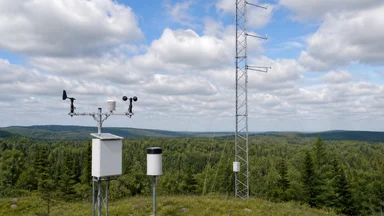
In the rolling hills of a temperate forest, a small weather station has been quietly recording temperature, humidity, wind speed, and rainfall for over a decade. It sits beside a carbon flux tower, a structure that once housed a state-of-the-art spectrometer designed to measure greenhouse gas concentrations. That spectrometer, the centerpiece of a multi-million-dollar research project, lost its funding after just four years. The weather station, an unassuming cluster of sensors costing a few thousand dollars, kept running on a residual budget, its data stream uninterrupted. This inversion of fortunes, where the ancillary outlives the primary, is not a quirk of one site but a pattern embedded in the economics of Earth science.
A Spectrometer's Demise, a Weather Station's Quiet Persistence
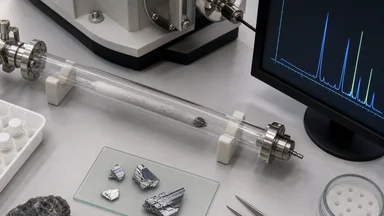
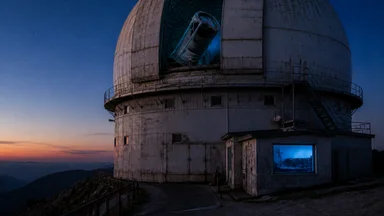
The carbon observatory in question, a joint effort between a university and a national research agency, was designed to answer a pressing question: how much carbon does this ecosystem absorb or release? The spectrometer, a Fourier-transform infrared instrument, could distinguish isotopic signatures of carbon dioxide and methane with remarkable precision. It ran for four years, producing a stream of data that fed into regional carbon budgets. Then the grant cycle ended. The agency, facing budget cuts, declined to renew the project, and the spectrometer was decommissioned, its sensitive optics packed away.
What remained was the weather station. It had been installed as a supporting cast member, meant to provide the local meteorological context for the flux measurements. It cost a fraction of the spectrometer, used off-the-shelf sensors, and required only a monthly visit to check batteries and clean the rain gauge. When the main project ended, the site manager, a field technician with a stubborn streak, found a small line item in a different grant to keep the station running. “It was just a few hundred dollars a year,” she later told a colleague. “It seemed wasteful to let it stop.”
That decision proved prescient. The weather station has now collected continuous data for over a decade, outliving not only the spectrometer but also two subsequent research projects at the site. Its record of local temperature trends, frost events, and drought periods has become a reference for studies of phenology, soil moisture dynamics, and even bird migration patterns. A researcher from a neighboring university, who had never visited the site, used the weather data to calibrate a satellite-based land surface model. The spectrometer’s data, by contrast, was archived in a repository, but its operation was tied to a fixed window, and its record ends abruptly.
This story echoes across the Earth sciences. Funding agencies, driven by a desire for novel results, tend to favor instruments that promise new measurements over those that ensure long-term consistency. A spectrometer that can detect a rare isotope is more likely to secure a grant than a rain gauge that has been running for years. Yet the rain gauge, precisely because it is cheap and robust, accumulates a record that grows more valuable with each passing season. The spectrometer, expensive and delicate, becomes a liability once the grant ends.
The Economics of Instrument Lifespans in Earth Science
The mismatch between grant timelines and monitoring needs is structural. A typical research grant runs for three to five years, enough to install an instrument, collect data, and publish a few papers. But many Earth system processes operate on decadal timescales. A forest’s response to a drought, an ocean’s uptake of heat, a glacier’s retreat, all unfold over periods that exceed the patience of any single funding cycle. Long-term records, such as the Mauna Loa CO2 curve or the Central England Temperature series, exist because institutions found ways to maintain instruments beyond the initial research motivation.
Spectrometers and other high-end analytical instruments are expensive to operate. They require regular calibration, consumable gases, and skilled technicians. When a grant ends, the cost of maintaining such an instrument often falls on the host institution, which may not have the budget. Decommissioning, with its careful packing and documentation, is itself a cost that few budgets anticipate. In contrast, a weather station’s operating costs are trivial: an annual battery replacement, occasional sensor swaps, and a data logger that can run for years. The simplicity is a virtue.
The decision to fund an instrument is often made by a panel of scientists who value novelty. A proposal to continue an existing measurement, no matter how valuable the record, is less likely to excite reviewers than one that promises a new capability. This bias toward the new is reinforced by publication incentives. A paper describing a novel technique or a surprising finding from a fresh dataset is more likely to be published in a high-profile journal than one that documents the ongoing behavior of a known system.
Yet the scientific value of a long record is often realized only after many years. Climate trend detection requires data spanning decades to distinguish a signal from natural variability. A single year of weather data is noise; thirty years is a climate. The cost of maintaining a weather station is so low that it is almost irrational to let it lapse, yet it happens all the time, because the funding structure treats each instrument as a project, not as part of an infrastructure.
How Ancillary Data Becomes a Scientific Asset
The weather station’s data did not sit idle. In the years after the spectrometer’s demise, researchers used it to interpret the carbon flux record that had been collected. Carbon flux measurements are sensitive to weather: a warm, sunny day drives photosynthesis; a cloudy, humid day suppresses it. Without local meteorological data, the flux record is nearly impossible to interpret correctly. The weather station provided that context, allowing the old flux data to be reanalyzed with confidence.
Beyond that, the weather record found new uses. A group studying soil respiration needed to know when the ground was frozen. A hydrologist used the rainfall data to model streamflow in a nearby catchment. A data rescue project, which aims to salvage orphaned datasets, listed the weather station as a success story, noting that its continuous record had been incorporated into a national climate database. The data had become a public good, used by scientists who had no connection to the original project.
Reanalysis products, such as global weather models, depend on long-term observational records to validate and correct their outputs. A single station’s record may seem small, but it contributes to the fabric of observations that underpin our understanding of the climate system. The value of ancillary data often grows over time, as new questions emerge that require exactly the kind of local, long-term context that the data provide.
This phenomenon, sometimes called “data rescue” or “data legacy,” is gaining attention in the Earth science community. Funding agencies are beginning to recognize that the data produced by a project may outlive the project itself, and that preserving access to that data is a scientific priority. But the recognition is uneven, and many datasets are still lost when a project ends, either because the storage medium degrades or because the institutional memory of how to use the data fades.
Publication Pressure and the Bias Toward Novel Instruments
The scientific publishing system amplifies the bias toward novelty. High-impact journals, such as Nature and Science, favor papers that report breakthroughs: a new measurement, a surprising result, a new technique. A paper that describes a long-term weather record, no matter how carefully analyzed, is unlikely to make the cover. This creates a perverse incentive: researchers are rewarded for building new instruments and generating new data, not for maintaining existing ones.
Yet many of the most cited papers in Earth science rely on long-term records. The Keeling Curve, which documents the rise of atmospheric CO2, is based on a continuous measurement that has run for over sixty years. The paper that first described it was published in 1960, but its impact has grown over time. Similarly, studies of phenology, the timing of biological events, depend on records that span decades, often collected by amateur observers or by simple instruments like the weather station.
The tension between novelty and longevity is not easily resolved. Funding agencies, responding to publication pressure, may be reluctant to support long-term monitoring, which is seen as less glamorous and less likely to produce a high-profile paper. But a growing body of evidence suggests that the most valuable scientific assets are often the ones that were not designed to be flashy, but simply to be reliable.
Lessons from the Carbon Observatory’s Weather Station
The weather station’s longevity offers several lessons. First, cheap and robust sensors can outlast their expensive counterparts. The station’s sensors were not cutting-edge, but they were designed to operate in harsh conditions with minimal maintenance. This robustness is a design virtue that is often undervalued in the pursuit of precision.
Second, operational simplicity matters. The station required no specialized training to maintain, and its data logger used a standard format that could be read by any computer. This simplicity made it easy to keep running, even when the project’s funding had ended. In contrast, the spectrometer’s proprietary software and delicate optics required a specialist to operate, making it impossible to continue without dedicated support.
Third, data continuity enables climate trend detection. The weather station’s record, now spanning over a decade, has already revealed a subtle warming trend in the region, a trend that would have been invisible in a shorter record. This trend has implications for the ecosystem’s carbon balance, and it is only detectable because the station kept running.
Finally, budgeting should include provisions for decommissioning and legacy. When a project ends, there should be a plan for what happens to the data and the equipment. In this case, the weather station was kept running because an individual made a small effort, but such efforts should be institutionalized. Funding agencies should require that projects include a legacy plan, ensuring that valuable data and infrastructure are not lost.
Practical Takeaways for Climate Research Funding
The story of the weather station suggests several practical changes to how climate research is funded. First, funding agencies should allocate a small share of every grant for ancillary equipment, such as weather stations, that can continue operating beyond the project’s end. This would not be a large cost, but it would ensure that basic observations continue.
Second, support for data curation should extend beyond project end dates. Data repositories need ongoing funding to maintain and provide access to archived data. This is a common good, and it should be funded accordingly.
Third, researchers should be encouraged to publish ancillary datasets, even if they are not the main result of a project. A short data paper describing a weather station’s record can make it citable and discoverable, increasing its use and value.
Fourth, collaborations between funding bodies and observatories, such as the one that kept the weather station running, should be fostered. These collaborations can provide the small amounts of funding needed to keep instruments running, and they can also help to build institutional memory.
Finally, it is time to recognize that long-term monitoring is a public good, not just a project output. The weather station’s record is used by scientists, policymakers, and the public, and its value will only grow with time. Funding it should be seen as an investment in the future, not as a cost to be minimized.
Counterarguments: The Case for Novel Instruments
It would be a mistake to conclude that novelty is always inferior to longevity. New instruments often provide capabilities that were previously impossible, opening entirely new research frontiers. For instance, the development of cavity ring-down spectroscopy allowed researchers to measure methane isotopes in real time, a feat that was not achievable with older techniques. Such innovations can lead to discoveries that justify their higher costs and shorter lifespans. The key is not to eliminate novel instruments but to balance them with sustained monitoring.
Moreover, the argument for long-term monitoring assumes that the measurements remain relevant. Scientific questions evolve, and a sensor that was designed to answer a specific question may become obsolete. For example, early weather stations measured temperature and precipitation, but modern climate research also requires data on solar radiation, soil moisture, and atmospheric composition. Upgrading instruments to meet new needs can be more cost-effective than maintaining old ones. Thus, a purely conservative approach, favoring only the oldest instruments, would be equally flawed.
In practice, the most successful research programs integrate both novel and long-term components. The FLUXNET network, a global collection of eddy covariance towers, combines advanced gas analyzers with standard meteorological sensors. The gas analyzers are often replaced as technology improves, but the meteorological sensors remain, providing a consistent baseline. This hybrid approach acknowledges that both novelty and longevity have roles to play, and that the optimal mix depends on the research question.
Examples from Other Fields
The pattern of ancillary instruments outlasting their primary counterparts is not unique to this carbon observatory. In oceanography, Argo floats, which measure temperature and salinity in the upper ocean, were initially deployed as a supplement to ship-based surveys. The ships were expensive and infrequent, while the floats were cheap and autonomous. Over time, the floats have become the backbone of ocean monitoring, providing continuous data that ships could never match. Similarly, in seismology, simple seismometers have been running for decades, while more complex instruments have come and gone. The long records from these simple instruments are essential for understanding earthquake cycles and hazard assessment.
In the field of ecology, the Hubbard Brook Experimental Forest in New Hampshire has maintained a weather station since the 1950s. The station was originally part of a study on nutrient cycling, but its data have been used for countless other purposes, from tracking acid rain recovery to calibrating satellite remote sensing. The station’s longevity has made it a cornerstone of ecosystem science. These examples illustrate that the value of long-term data is often realized in ways that the original investigators could not have anticipated.
The Role of Institutional Memory
One often overlooked factor in the success of long-term monitoring is institutional memory. When a project ends, the knowledge of how to operate and maintain the instruments, and how to interpret the data, can be lost if the personnel move on. In the case of the weather station, the site manager’s familiarity with the equipment was crucial. She knew the quirks of the sensors, the best times to visit, and how to troubleshoot problems. This tacit knowledge is not captured in manuals or databases, and it is fragile.
Institutions can preserve institutional memory by documenting procedures, training successors, and maintaining relationships with former staff. Some observatories have created formal data management plans that include detailed metadata and standard operating procedures. Others have established advisory committees that include long-term stakeholders. These practices not only preserve knowledge but also build a sense of ownership and continuity.
Funding agencies can support institutional memory by requiring that projects include a plan for knowledge transfer, and by providing bridge funding to maintain operations during transitions. The cost of losing institutional memory can be high, as it may take years to rebuild the expertise needed to operate a complex instrument. In contrast, the cost of preserving it is relatively small, especially for simple instruments like weather stations.
Conclusion
As the climate continues to change, the demand for long-term observations will only increase. The weather station at the carbon observatory is a small example, but it points to a larger truth: the instruments that matter most are not always the most expensive or the most novel. They are the ones that keep running, and the data they produce is a gift to future generations. By recognizing the value of ancillary data, supporting long-term monitoring, and preserving institutional memory, we can ensure that the scientific infrastructure we build today will serve us well into the future.