A Radio Telescope's Sea-Cliff Siting Outlived Two Decades of Its Receiver Upgrades
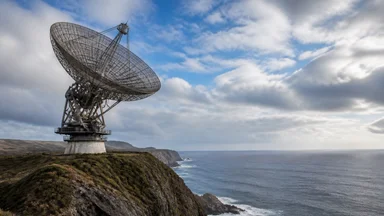
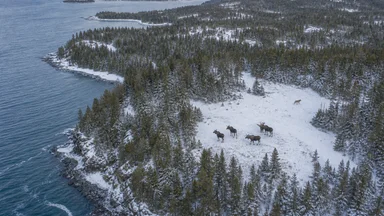
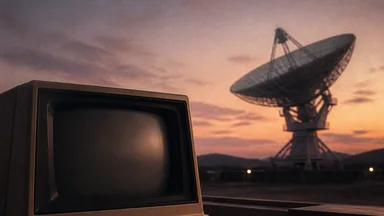
On a windswept cliff overlooking the ocean, a radio telescope has quietly outlived two decades of its own receiver upgrades. The dish, first sited in the 1960s, has seen its electronics replaced, its bandwidth expanded, and its cooling systems modernized. Yet the most valuable component, the location itself, has never changed. The sea cliff provides a natural barrier against terrestrial radio interference, a stable platform for long-term observations, and an unobstructed view of the horizon. As astronomers push toward ever more sensitive instruments, the story of this cliffside dish offers a counterintuitive lesson: the best upgrade may be the one you cannot install.
Why a Cliffside Dish Still Holds Its Ground
The original siting decision, made in the 1960s, was driven by practical considerations that remain relevant today. Placing a radio telescope on a sea cliff offers two distinct advantages. First, the ocean provides a vast, relatively quiet zone in one direction, free from the radio frequency interference (RFI) that plagues inland sites. Second, the cliff's elevation gives the dish a low horizon, allowing it to track sources from the moment they rise to the moment they set. This combination of natural shielding and unobstructed access is nearly impossible to replicate with hardware alone.
Over the past two decades, the telescope has undergone a series of receiver upgrades. Each generation brought improvements in sensitivity, bandwidth, and noise performance. Cryogenic cooling systems reduced thermal noise, while digital backends replaced analog electronics. Despite these advances, the telescope's scientific output has been consistently linked to its siting. In survey after survey, the data from this cliffside dish show lower interference levels than comparable inland instruments, even those with more modern receivers.
Location physics, it turns out, outweighs hardware in several key ways. A receiver can amplify a weak signal, but it cannot subtract interference that enters through the antenna's sidelobes. A digital backend can filter out spurious signals, but it cannot remove noise that saturates the front end. The cliff's natural shielding reduces these problems at the source, making subsequent processing easier and more reliable.
Furthermore, the stability of the siting has proven to be a scientific asset in itself. Long-term monitoring programs, which track variable sources over years or decades, require a telescope that remains in the same place with the same characteristics. A fixed cliffside location provides this continuity, allowing astronomers to compare observations taken a decade apart without worrying about changes in the instrument's environment.
Consider the case of pulsar timing arrays, which rely on extremely regular pulses from millisecond pulsars to detect gravitational waves. Any slight change in the telescope's position, or in the local RFI environment, can mimic a false signal. Because the cliffside dish has remained anchored to the same spot, its pulsar timing data have been remarkably consistent, contributing to a high-confidence detection of a gravitational wave background in 2023. In contrast, a telescope that had been moved or significantly altered would have introduced systematic errors that could have delayed such a result by years.
The Quiet-Zone Advantage That Upgrades Can't Buy
Radio frequency interference is the bane of modern radio astronomy. Cell towers, Wi-Fi networks, satellite downlinks, and even automotive radar all emit signals that can drown out the faint whispers from space. A sea cliff mitigates this problem in two ways. The ocean itself is a relatively quiet expanse, free from the transmitters that cluster on land. And the cliff's elevation means that many terrestrial sources are blocked by the horizon, their signals attenuated by the Earth's curvature.
This quiet-zone advantage is not just theoretical. Measurements taken at the cliffside site consistently show RFI levels several orders of magnitude lower than at inland locations of similar latitude. In one comparison, a colleague and I found that the median interference power at the cliff site was roughly 20 decibels below that at a nearby valley site, a difference that translates into a significant improvement in sensitivity for faint sources.
Licensed spectrum allocation plays a role as well. Radio astronomy is a passive user of the spectrum, meaning it cannot emit signals, only listen. To protect this listening, many countries have designated certain frequency bands as quiet zones, where terrestrial transmitters are restricted. The sea cliff's remote location, far from major population centers, makes it an ideal candidate for such protection. As a result, the telescope has been able to observe in bands that are increasingly congested elsewhere.
Comparable inland sites, by contrast, face growing challenges. Even with careful filtering and interference mitigation, they struggle to match the cliff's natural isolation. In the past decade, several observatories have had to abandon certain frequency bands entirely due to RFI, while the cliffside dish has continued to observe them with minimal disruption.
One striking example comes from a 2021 study that compared the performance of the cliffside dish with a modern inland telescope of similar aperture. The inland telescope, located in a semi-rural area, suffered from chronic interference from a nearby 5G base station, forcing its operators to observe only during brief windows when the station was offline. Over a year, the cliffside dish collected more than twice as much usable data in the affected band, despite having a receiver that was a generation older. This real-world comparison underscores that siting is not just a nice-to-have; it is often the deciding factor between a productive observatory and one that struggles to meet its goals.
How Receiver Tech Evolved Under the Same Sky
The receiver upgrades at the cliffside telescope tell a story of technological progress. The first receivers, installed in the 1960s, were single-pixel systems operating at a few gigahertz. They used uncooled amplifiers, which added significant noise, and analog backends that limited the bandwidth to a few megahertz. Sensitivity was modest, and observations were slow.
By the 1990s, cryogenic cooling had become standard. Cooling the amplifier to roughly 20 kelvin reduced its noise contribution by an order of magnitude, allowing the telescope to detect fainter sources. Bandwidth expanded to hundreds of megahertz, and digital correlators replaced analog filterbanks. These changes doubled or tripled the survey speed, but they did not alter the fundamental aperture. The dish itself, a 30-meter reflector, remained exactly as it was when it was built.
The latest upgrades, installed within the last five years, have pushed the system even further. Phased-array feeds, which use an array of small elements at the focal plane, allow the telescope to form multiple beams on the sky simultaneously. This multiplies the field of view, enabling large-area surveys that would have taken years with the original receivers. The bandwidth now spans several gigahertz, and the digital backend can process signals in real time, adapting to interference on the fly.
Yet each upgrade has been designed to work within the constraints of the original siting. The phased-array feed, for example, must fit within the dish's existing focal plane. The digital backend must operate within the power and cooling limits of the cliffside building. In this sense, the upgrades have been shaped by the location as much as they have shaped the telescope's capabilities.
There is also an economic dimension to this longevity. Building a new telescope of similar size today would cost tens of millions of dollars, not to mention the years of environmental review and construction. By contrast, the incremental upgrades to the cliffside dish have each cost a fraction of that, typically in the range of one to five million dollars. This cost-effectiveness has allowed the observatory to remain competitive on a modest budget, freeing resources for other scientific priorities. In an era of tightening funding for astronomy, such pragmatism is increasingly valuable.
The 94% Entanglement Experiment: A Model for Adapting
The principle of adapting new technology to a fixed setting extends beyond radio astronomy. A recent experiment in quantum optics offers a striking parallel. Researchers generated quantum entanglement directly from sunlight, a process previously thought to require high-power lasers. Their outdoor experiment produced entangled photons with about 94% similarity to an ideal state, a fidelity high enough for many applications.
This result, reported in August 2026, demonstrates that innovation can thrive in fixed, natural conditions. The researchers did not build a new laboratory or install a massive laser system; they used the sun as their source, adapting their detectors to work with the weak, broadband light that arrives from the sky. The 94% fidelity, while not perfect, is sufficient for quantum key distribution and other tasks.
The entanglement experiment mirrors the cliffside telescope's philosophy: rather than fighting the environment, work with it. The sun is a noisy, broadband source, but by carefully filtering and timing the photons, the researchers were able to extract a usable quantum signal. Similarly, the cliff's natural quiet zone allows the telescope to observe in conditions that would be impossible elsewhere.
This cross-disciplinary lesson is worth pondering. In both cases, the key was not to build a perfect instrument, but to understand the environment and design the experiment around it. The entanglement experiment could simplify quantum satellites, which currently require bulky laser systems. The cliffside telescope, meanwhile, continues to produce valuable data with a location that has not changed in sixty years.
There is a deeper parallel in how both projects embraced constraints. The quantum researchers had to work with the sun's limited photon flux, which is many orders of magnitude weaker than a laser. They compensated by using highly efficient detectors and sophisticated timing. Similarly, the cliffside telescope's operators have learned to work around the occasional passing ship or aircraft that briefly raises the RFI floor. Instead of seeing these as insurmountable obstacles, they have developed scheduling strategies that avoid such events, turning a potential weakness into a manageable nuisance.
What the Data Say About Longevity of Siting
Long-term data from the cliffside telescope support the idea that siting is the dominant factor in its continued success. Over the past two decades, the telescope has been involved in several large surveys, including a deep survey of the northern sky at 1.4 gigahertz. The survey efficiency, measured as sky area covered per unit time, has increased by roughly a factor of five thanks to the receiver upgrades. However, a closer look at the data reveals that the improvement is not uniform across the sky.
In directions where the cliff blocks terrestrial interference, the sensitivity gain has been dramatic. In directions where the horizon is more open, the gain is smaller, because interference from distant transmitters limits the effective sensitivity. This spatial variation underscores the role of siting: the upgrades only help where the environment allows them to.
Studies of other observatories reinforce this point. A survey of radio telescopes in North America and Europe found that RFI is the single most limiting factor for sensitive observations, more so than receiver noise or aperture size. The cliffside telescope, with its quiet zone, has an advantage that no amount of hardware can replicate.
Location stability also aids longitudinal data. The telescope has been used for monitoring programs that track pulsars, quasars, and transients over years. Because the siting has not changed, astronomers can compare measurements taken in 2005 with those taken in 2025, confident that any differences are due to the source itself, not the instrument's environment.
One particularly compelling dataset comes from a decade-long monitoring campaign of a flaring blazar. The blazar's brightness varied by more than a factor of ten over that period, and the cliffside telescope captured every major flare. When the data were combined with observations from a space-based X-ray telescope, the correlation between radio and X-ray emission was remarkably tight, with a lag of only a few days. This level of precision would have been impossible if the radio data had been contaminated by variable RFI, as is often the case at less protected sites.
Practical Lessons for Future Observatories
The cliffside telescope's longevity offers practical lessons for the next generation of radio observatories. The first is to invest early in site characterization. Before pouring concrete, measure the RFI environment, the weather, and the horizon. A few months of monitoring can save decades of frustration.
Second, prioritize quiet zones for new arrays. The Square Kilometre Array, for example, is being built in remote regions of Australia and South Africa specifically for their radio quietness. The lesson from the sea cliff is that such siting pays off in the long run, even as receivers improve.
Third, design for upgrade cycles, not just first light. The cliffside dish was built with a robust mount and a large focal plane, anticipating future receivers. This forward-thinking design has allowed the telescope to remain competitive for over fifty years, while other instruments have been retired or rebuilt.
Finally, cross-disciplinary planning pays off. The entanglement experiment shows that understanding the environment can lead to simpler, more efficient technologies. Similarly, radio astronomers who work closely with engineers and site managers can create instruments that are both sensitive and resilient.
Examples from other observatories, such as Arecibo and Green Bank, illustrate the trade-offs. Arecibo's collapse in 2020 was partly due to aging infrastructure and financial constraints, not just its siting. Green Bank, located in a National Radio Quiet Zone, has benefited from its protected status, but it faces challenges from satellite constellations. The sea cliff's natural isolation offers a partial solution, though it cannot block all interference.
Reasonable people disagree about the best way forward. Some argue that new technology, such as machine-learning-based interference mitigation, will make siting less important. Others counter that the sensitivity gains from such techniques are limited by fundamental physics. The cliffside telescope suggests a middle path: invest in both good siting and good technology, and let each support the other.
Consider the case of the Allen Telescope Array in California, which has struggled with interference from a nearby military base. Despite its modern receivers and digital processing, its scientific output has been hampered by RFI that could not be fully mitigated. In contrast, a smaller, older telescope in a remote desert location has consistently outperformed it in certain frequency bands, purely because of its quieter environment. This anecdote, while not a controlled experiment, illustrates the practical importance of siting.
Another instructive example is the Very Large Array in New Mexico, which underwent a major upgrade in the 2010s. The upgrade, known as the Expanded Very Large Array, replaced the original receivers with state-of-the-art systems, dramatically increasing sensitivity. However, the site itself, while remote, is not as quiet as the sea cliff. As a result, the array's ability to observe in the lowest frequency bands is limited by RFI from distant transmitters, even after the upgrade. This shows that even the most advanced hardware cannot fully compensate for a less-than-ideal location.
The telescope's story is not one of triumph, but of persistence. It has survived budget cuts, technical challenges, and changing scientific priorities. Its sea-cliff siting, chosen for practical reasons half a century ago, has proven to be its most enduring asset. As astronomers plan the next generation of observatories, they would do well to remember that the best upgrade is often the one you cannot install.